
August 16, 2026
304 vs 201 Stainless Steel: What Commercial Kitchen Equipment Buyers Should Know
Stainless steel is the default material for most commercial kitchen equipment, but “stainless steel” is not one material. The grade—most often 304 or 201 in this sector—directly affects corrosion resistance, how the equipment performs in its service environment, how much maintenance it needs, and the purchasing cost. For importers, distributors and project buyers, the right choice is rarely “the highest grade possible.” It is the grade that matches the equipment type, the operating environment and the available budget. This guide explains the practical differences and how to specify them when you order.
What Is 304 Stainless Steel?
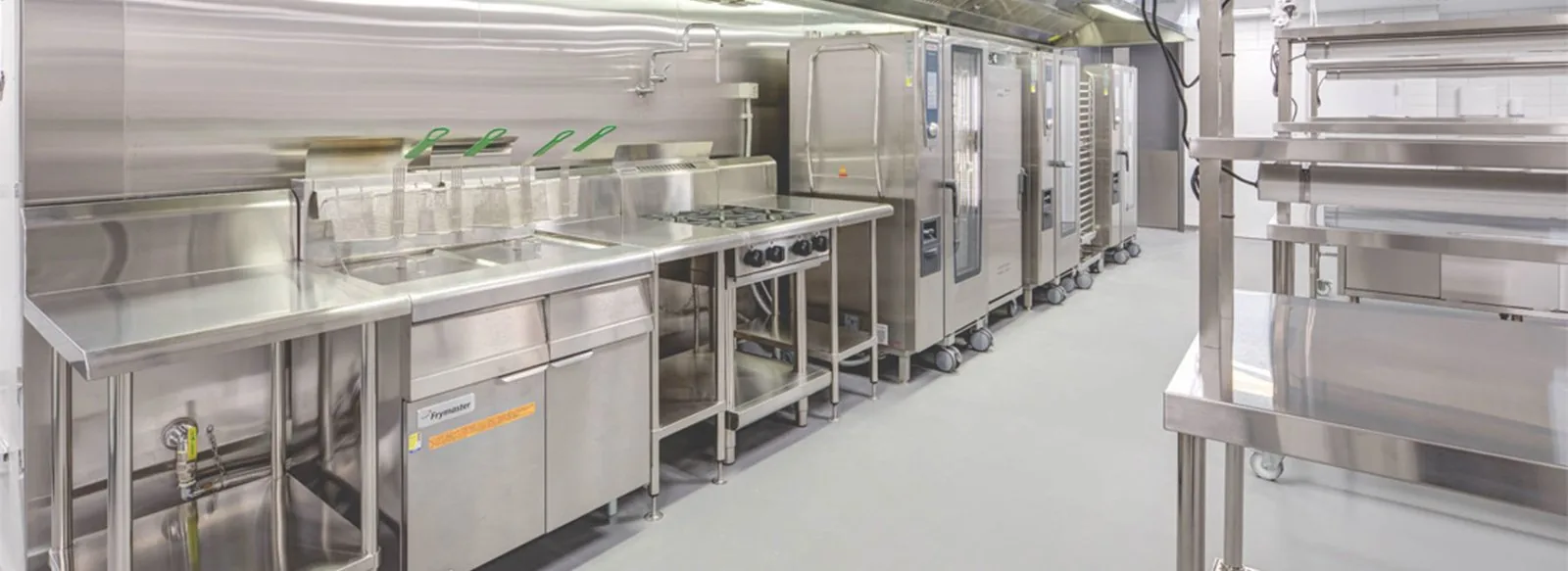
304 is the most widely selected stainless steel grade for commercial kitchen equipment. It belongs to the “18/8” family—roughly 18% chromium and 8% nickel—which gives it stronger corrosion resistance than 201. That makes 304 better suited to wet, humid and frequently washed areas: commercial sinks, work tables, food-preparation surfaces, and any equipment regularly exposed to water, steam or cleaning chemicals.
Its higher nickel content contributes to better corrosion resistance, toughness and fabrication performance compared with 201. The trade-off is cost: 304 is noticeably more expensive than 201, which is why it is normally specified where corrosion resistance genuinely matters rather than across an entire product.
Important: selecting 304 does not automatically make a product food-safe. Hygiene also depends on the surface finish, fabrication quality, weld treatment, cleaning routine and overall product design. Grade is one factor, not the whole story.
What Is 201 Stainless Steel?
201 is a more cost-conscious stainless steel option. Compared with 304, it generally contains more manganese and nitrogen and less nickel, which lowers raw material cost while still providing a stainless, corrosion-resistant surface for many indoor uses. It is suitable for dry indoor applications such as storage shelving, support frames and selected work tables that are not exposed to standing water.
In humid, coastal or chemically aggressive environments, 201 needs more careful maintenance and is more prone to surface rusting over time than 304. It should not be described as “fake stainless steel” or assumed to be poor quality. For the right application and budget, it is a practical, widely used material—the key is matching it to the environment.
304 vs 201 Stainless Steel: Key Differences
| Factor | 304 Stainless Steel | 201 Stainless Steel |
|---|---|---|
| Corrosion resistance | Higher—performs better in wet and humid conditions | Lower—more sensitive to moisture and chemicals |
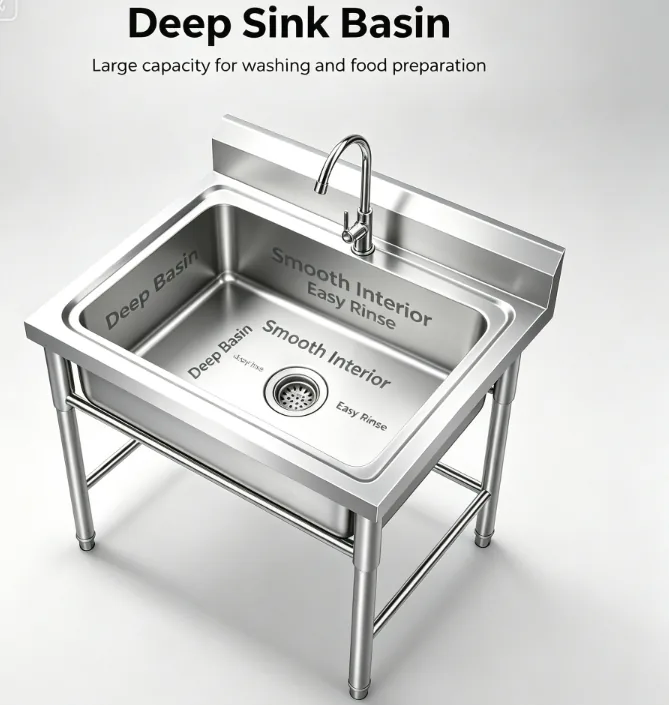
| Wet-area suitability | Recommended for sinks, prep surfaces and washed equipment | Limited—best kept dry |
| Indoor dry-area suitability | Excellent | Very good and cost-effective |
| Maintenance requirements | Lower day-to-day care needed | Needs more attentive cleaning and drying |
| Relative material cost | Higher | Lower |
| Typical commercial kitchen applications | Sinks, work tables, prep stations, dish areas | Shelving, storage, support frames, dry-area units |
| Recommended operating environment | Wet, humid and frequently washed indoor environments; evaluate 316 for high-chloride or marine exposure | Dry, indoor, low-moisture |
Figures above describe relative behavior, not fixed specifications. Actual performance also depends on thickness, finish and fabrication.
Which Grade Should Buyers Choose?
Choose 304 for:
- Commercial sinks
- Wet preparation areas
- Frequently washed equipment
- Humid indoor markets
- Projects requiring longer corrosion resistance and service life
304 generally performs better than 201 in humid environments. However, in chloride-rich coastal, marine or salt-processing environments, 304 can still develop pitting corrosion. Depending on exposure and maintenance conditions, 316 stainless steel or additional corrosion-control measures may be more appropriate.
Consider 201 for:
- Dry storage shelving
- Selected support frames
- Budget-sensitive indoor projects
- Equipment kept away from standing water and aggressive cleaning chemicals
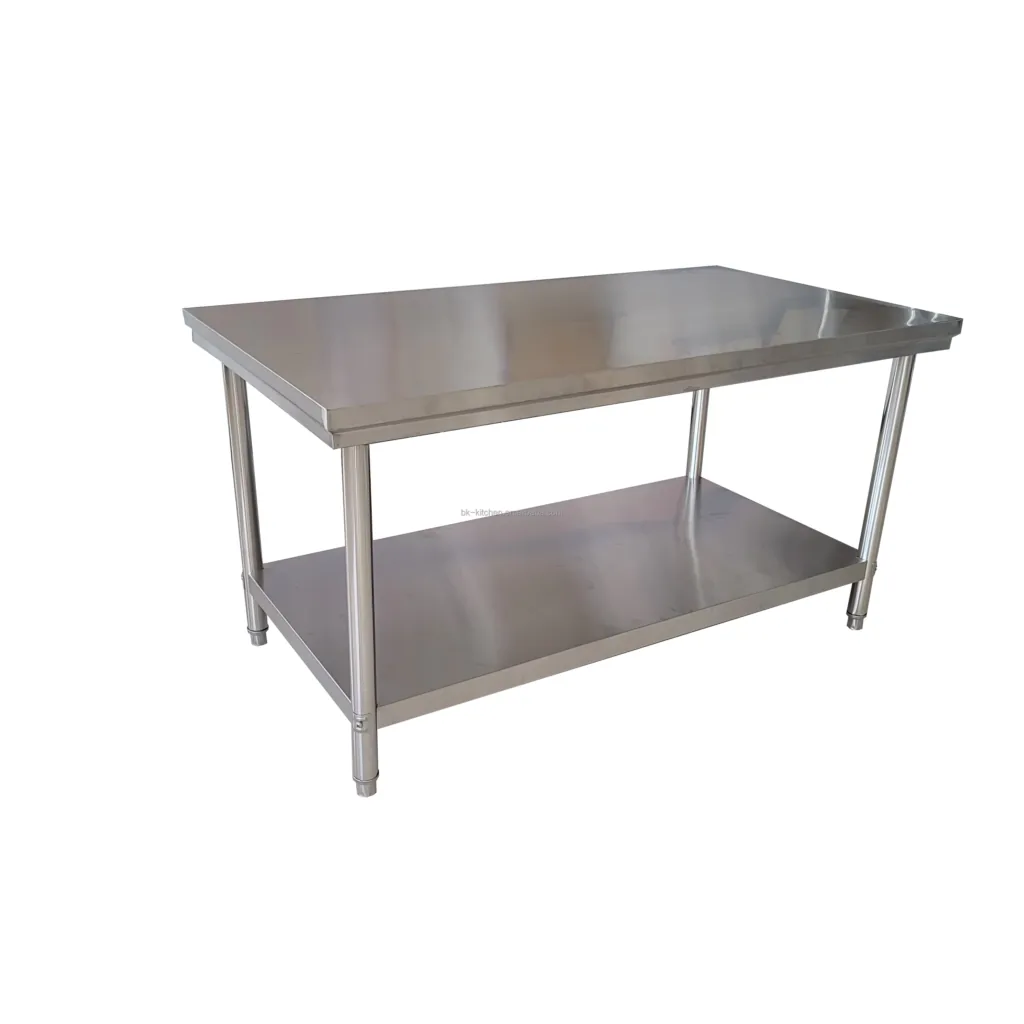
Different components of one product may use different grades when clearly specified and agreed with the buyer—for example, a work table with a 304 top and a 201 supporting frame. This kind of split specification is normal and can control cost without sacrificing the wet-surface performance that matters most.
Questions to Ask Before Ordering
- Which parts are made from 304 or 201?
- What is the actual stainless steel thickness (gauge or mm)?
- What surface finish is supplied (e.g., brushed, satin, mirror)?
- Will the equipment be used in a wet, humid or coastal environment?
- How are welding areas finished and cleaned?
- Can the supplier confirm the material specification before production?
Material Grade Is Not the Only Quality Factor
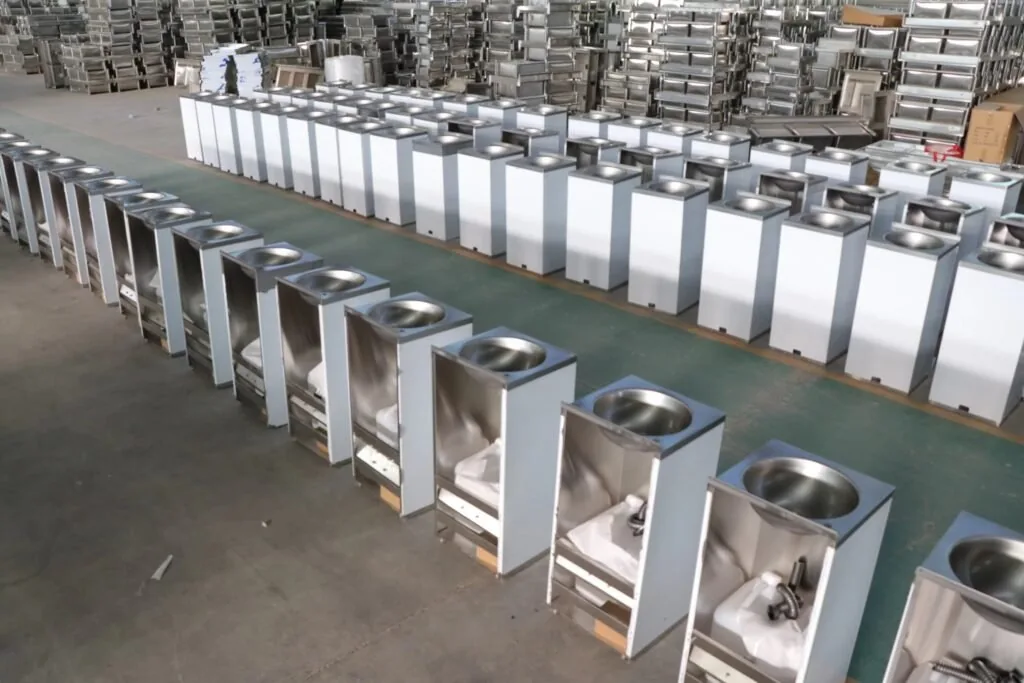
Stainless steel grade is important, but it is only one of several factors that determine whether equipment performs well over time:
- Sheet thickness—affects rigidity and dent resistance
- Welding quality—poor welds are common rust-start points
- Polishing and surface finish—smoother finishes are easier to clean and sanitize
- Edge treatment—deburred, rounded edges are safer and longer-lasting
- Structural reinforcement—affects load capacity and stability
- Drainage design—especially for sinks and wet tables
- Quality inspection—incoming material and final checks
- Export packaging—protects the surface during long shipping
Fabrication quality can significantly affect service life. Poor welding or surface treatment can reduce the corrosion performance of even a higher-grade stainless steel. Evaluate the whole build, not the grade label alone. See how we control these steps at our factory.
Our Practical Recommendation
For wet, demanding and long-term commercial kitchen use, 304 is generally the safer choice. For suitable dry indoor applications, 201 can be a practical way to reduce cost without unacceptable risk. There is no single answer for every product: the right specification depends on the equipment, the environment, the expected service life and the budget. We recommend deciding grade per component, documenting it in the order, and confirming material before production.
Frequently Asked Questions
Is 201 stainless steel suitable for commercial kitchens?
Is 304 stainless steel rust-proof?
Which stainless steel grade is better for commercial sinks?
Can a product combine 304 and 201 stainless steel components?
Not Sure Which Stainless Steel Grade to Specify?
Send us your product type, dimensions, operating environment and required quantity. Our team can recommend a practical material specification for your project.
Prefer to talk to a person? Contact us and we will help you specify the right grade.